

Building a Regenerative Farm in Andalusia, Our Journey With Permaculture and Syntropic Agriculture
Dry summers, steep terraces and thin soil. What three years of permaculture and syntropic experiments have actually taught us about regenerating Mediterranean land.
The land we bought had been farmed conventionally for a long time, in the way that much of inland Andalusia has: rows of trees on bare, tilled ground, everything else considered a weed and removed. It looked tidy. It was also, functionally, close to a desert with irrigation attached. The soil was pale, shallow and hydrophobic in summer — water ran off it rather than into it — and there was almost no organic matter to speak of.
Three years later there are parts of the farm where you can push your hand into dark, damp soil in August. That is the whole story in one sentence. What follows is how it happened, including the parts that did not work.
Water first, always
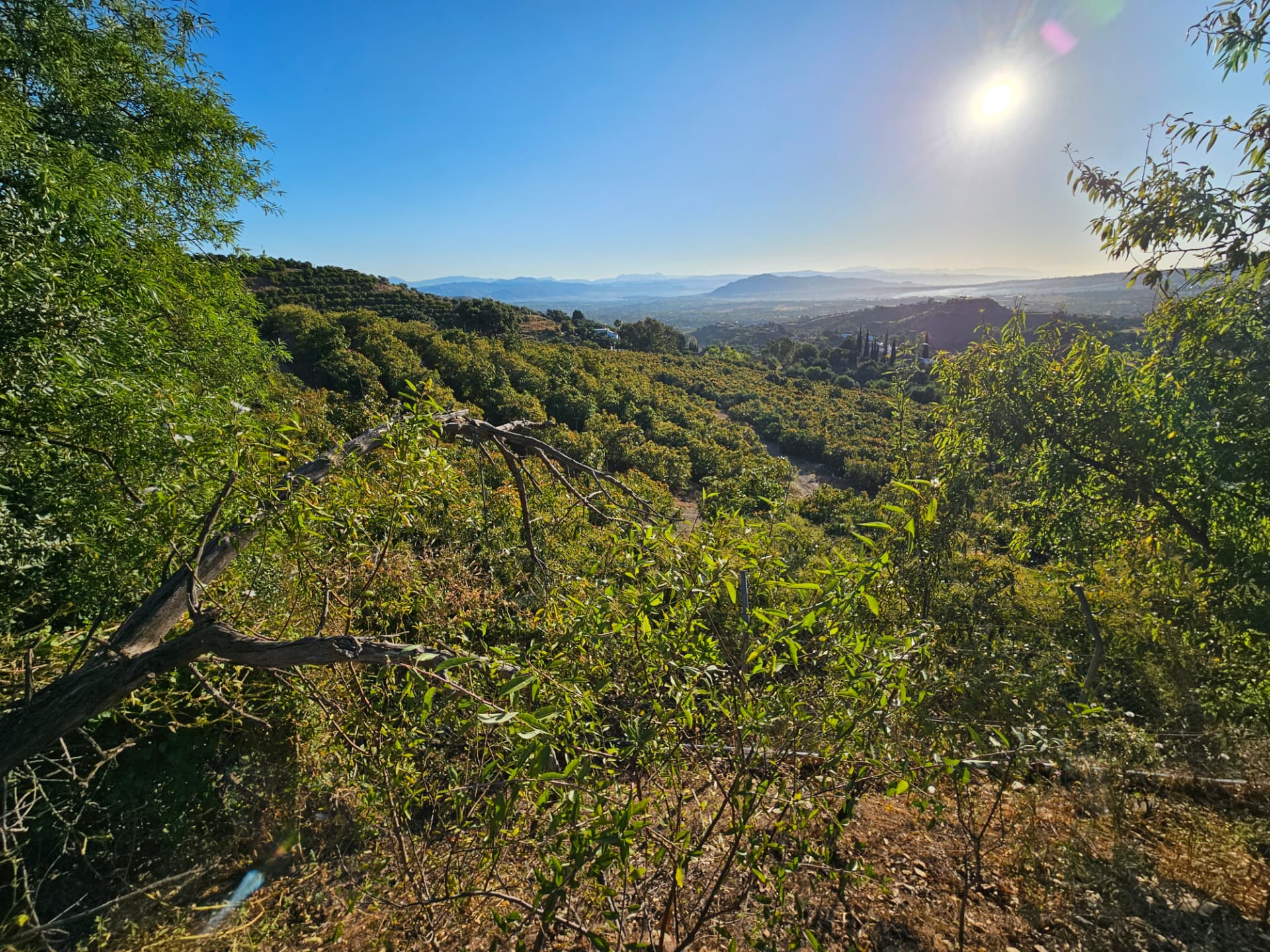
In a Mediterranean climate every other decision is downstream of water. We get most of our rain in a handful of intense winter events, and then very little for four or five months. Our first serious work was therefore not planting but slowing water down: swales on contour where the terraces allowed it, repaired terrace walls, mulched channels, and a deliberate policy of never leaving soil bare going into the rainy season.
- Catch it high and let it move slowly downhill through the soil rather than over it.
- Store it in organic matter, not only in tanks — every percent of soil carbon holds meaningful extra water.
- Shade the ground. Bare soil in Andalusian July loses moisture faster than any irrigation schedule can replace it.
- Irrigate deeply and less often, so roots go down instead of sideways.
What permaculture gave us
Permaculture is best understood as a design framework rather than a set of techniques. It gave us the discipline of observing before acting — a full year of watching where frost sat, where the wind came from, where water gathered — and the habit of placing things according to how often we need them. The vegetable garden is thirty seconds from the kitchen. The tool store is next to the work we actually do. The chickens are where their mess is useful.
What syntropic agriculture changed
Syntropic agriculture — the approach developed by Ernst Götsch, also known as syntropic farming or successional agroforestry — changed how we plant. Instead of trees in rows with clean ground between them, we plant dense, layered lines: tall trees, medium trees, shrubs, vegetables and ground cover together, with fast species carrying the system while slow species establish. The prunings are not waste; they are the fertility programme. We wrote a full explanation in What Is Syntropic Farming?
We are not purists about it. Götsch's systems were developed in a wetter Brazilian context, and translating them to a dry Mediterranean hillside means accepting slower biomass production and adjusting spacing accordingly. We treat our syntropic lines as ongoing experiments and keep notes.
The chop and drop habit
The single change with the largest visible effect has been the simplest: everything we cut stays on the land. Prunings, cut grass, spent vegetable plants, the enormous quantity of biomass a good winter produces. It goes down as mulch, decomposes through spring, and gradually turns pale mineral soil into something that smells like a forest floor. It costs nothing except the discipline of not tidying up.
Everything we cut stays here. Fertility we grow ourselves is the only kind we can afford to keep growing.
Animals in the system
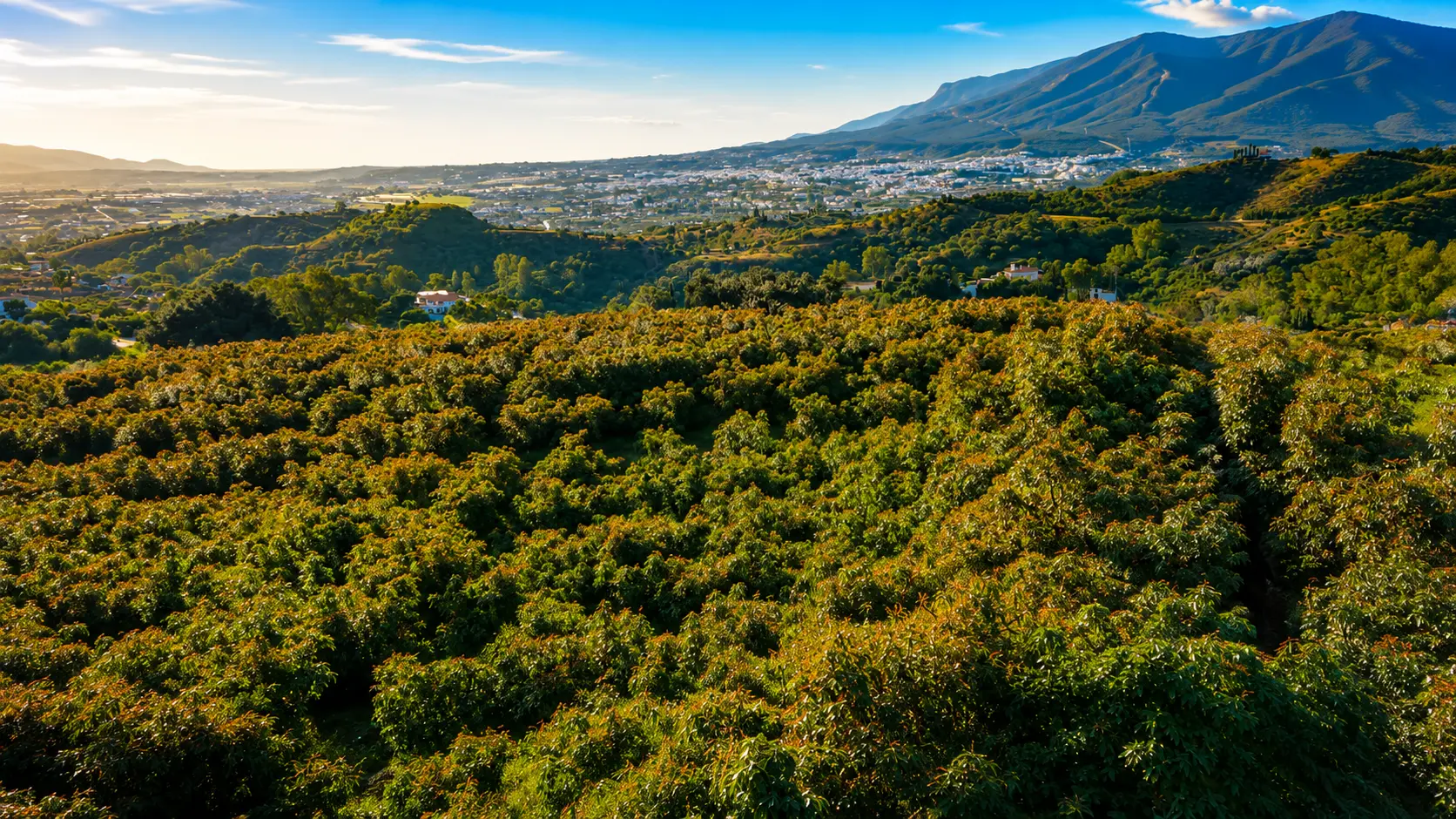
Chickens do three jobs: they eat kitchen and garden waste, they break the cycle of several pests under the fruit trees, and their bedding becomes the richest compost we have. Kept in one place they are a problem; moved regularly they are an engine. Ours rotate through the avocado forest, and the difference in the trees they have passed under is not subtle.
Mistakes worth naming
- Planting too much in the first spring, before we understood where the water went. We lost trees that a year of observation would have saved.
- Underestimating wind on the upper terraces. Windbreaks should have been the first thing we planted, not the third.
- Being too tidy. Mowing everything short in early summer removed the mulch we then had to import.
- Expecting syntropic densities to behave here as they do in the tropics. Our systems need more space and more patience.
Where we are now
Roughly a third of the farm is under regenerative management in a way we would be happy to show anyone. The vegetable garden feeds the houses through most of the year, the avocado and citrus terraces are underplanted and mulched, and the first syntropic lines are two seasons old and starting to look like something. The rest is queued up behind water work and time.
It is a long project by design. If it could be finished in three years it would not be the kind of thing worth doing. More on what it puts on the table in Why We Grow Our Own Food.
Related reading

What Is Syntropic Farming?
Syntropic farming, syntropic agriculture and syntropic agroforestry are different names for one approach, developed by Ernst Götsch. Here is how it works, and why it interests us in Andalusia.

Why We Grow Our Own Food
From avocado terraces to the vegetable garden: what six hectares of regenerative farmland taught us about nourishment and patience.

Monte Valeo, A Regenerative Farm and Longevity Retreat in Andalusia
Six hectares of hillside between Málaga and Marbella, slowly becoming a farm, a retreat and a place where people remember how good ordinary living can feel.