

Why We Grow Our Own Food
From avocado terraces to the vegetable garden: what six hectares of regenerative farmland taught us about nourishment and patience.
It would be cheaper to buy the vegetables. This is worth saying at the start, because the case for growing your own food is rarely economic and pretending otherwise does nobody any favours. We grow it because of what happens at the other end: on the table, in the soil, and in the way a day is organised around something living.
Flavour is a proxy for everything else
A tomato picked ripe in the morning and eaten at lunch is a different object from one picked green, chilled, and shipped. The same is true of an avocado left on the tree until it is genuinely ready. Flavour is not merely pleasant; it is broadly a signal of how the plant was grown and how long ago it stopped being alive. Guests notice it immediately, and it is usually the first thing they mention when they get home.
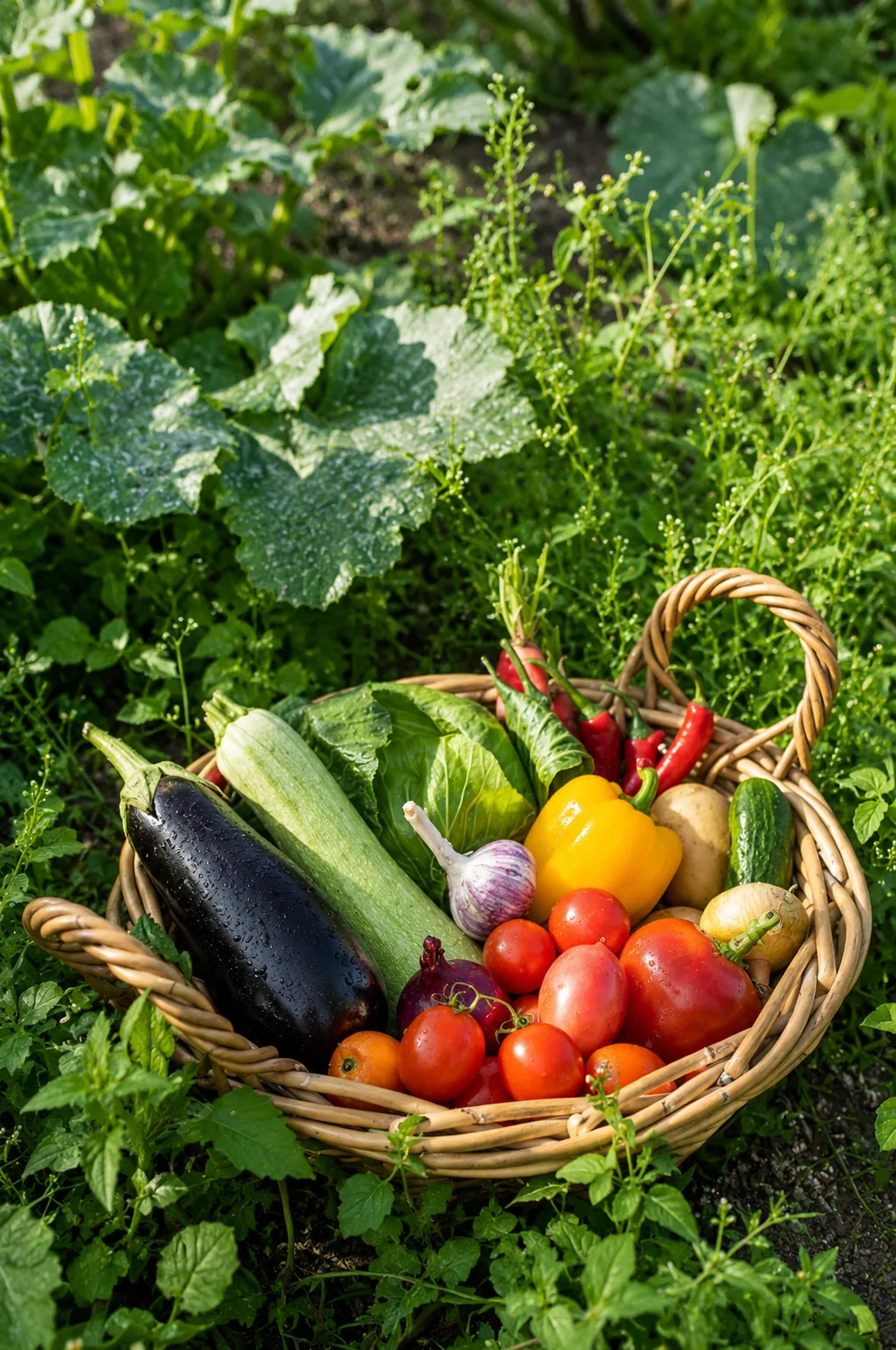
Feeding the soil, not the plant
Growing our own food is also the most direct way we improve the land. The garden runs on compost we make from kitchen waste, chicken bedding and the enormous quantity of prunings the farm produces each winter. Beds stay covered, roots stay in the ground where we can leave them, and nothing organic leaves the property. The result is soil that holds more water each year — which, in a place with five dry months, is the whole game.
What we actually grow
- Avocados on the terraces, our largest crop and the backbone of the farm.
- Citrus: oranges, lemons, mandarins — the reason winter breakfasts here are good.
- Olives, figs, pomegranates, almonds and a slowly expanding list of experiments.
- A year-round vegetable garden: tomatoes, courgettes, peppers and beans in summer; greens, brassicas, roots and broad beans through the mild winter.
- Eggs from the chickens that rotate through the avocado forest.
- Herbs everywhere, mostly because they are the easiest thing to grow badly and still enjoy.
The patience part
The vegetable garden gives feedback in weeks. The trees give it in years, and the soil in decades. Working with all three at once is a quiet corrective to how most of us are used to operating. You cannot rush an avocado tree into maturity, and it turns out that having something in your life which is entirely indifferent to your schedule is good for you.
The garden answers in weeks, the trees in years, the soil in decades. You learn to work on all three timescales at once.
From the land to the table
For guests and retreat groups this shows up as farm-to-table meals that are genuinely from the farm — not as a marketing phrase but as a constraint on the menu. What is ready is what gets cooked. In August that means tomatoes in everything. In February it means citrus, greens and slow-cooked things. Eating with the season is easy when the alternative involves a drive.

The techniques behind the growing are in Building a Regenerative Farm in Andalusia, and the layered planting method we are experimenting with is explained in What Is Syntropic Farming?
Related reading

Building a Regenerative Farm in Andalusia, Our Journey With Permaculture and Syntropic Agriculture
Dry summers, steep terraces and thin soil. What three years of permaculture and syntropic experiments have actually taught us about regenerating Mediterranean land.

What Is Syntropic Farming?
Syntropic farming, syntropic agriculture and syntropic agroforestry are different names for one approach, developed by Ernst Götsch. Here is how it works, and why it interests us in Andalusia.

What Is Regenerative Living?
Regeneration is not a lifestyle aesthetic. It is the simple question of whether the things you do each day leave you, and the place you live, in better condition than they found you.