

What Is Regenerative Living?
Regeneration is not a lifestyle aesthetic. It is the simple question of whether the things you do each day leave you, and the place you live, in better condition than they found you.
The word regenerative arrived in farming before it arrived anywhere else, and it meant something quite precise: not simply doing less damage, but actively rebuilding what had been lost. Sustainable agriculture aims to hold a line. Regenerative agriculture aims to move it — more soil at the end of the season than at the beginning, more life in that soil, more water held in the ground, more species present. The bar is not neutrality. The bar is improvement.
Once you have that definition in your hands, it is difficult not to apply it to the rest of life. Does this week leave me with more energy than it took? Does this work leave the people around me in better shape? Does this way of eating, moving, sleeping and relating build something, or does it slowly draw down a reserve I am not measuring?
Three honest tests
We find it useful to keep the idea concrete rather than philosophical. Three tests cover most of it.
Does it build capacity or spend it?
Stimulants, borrowed sleep and permanently urgent work all spend capacity. Strength, unhurried food, daylight, real rest and honest relationships build it. Both feel productive in the moment. Only one of them still looks like a good idea after five years, which is precisely the timescale nobody uses when making these decisions.
Does it cycle, or does it extract?
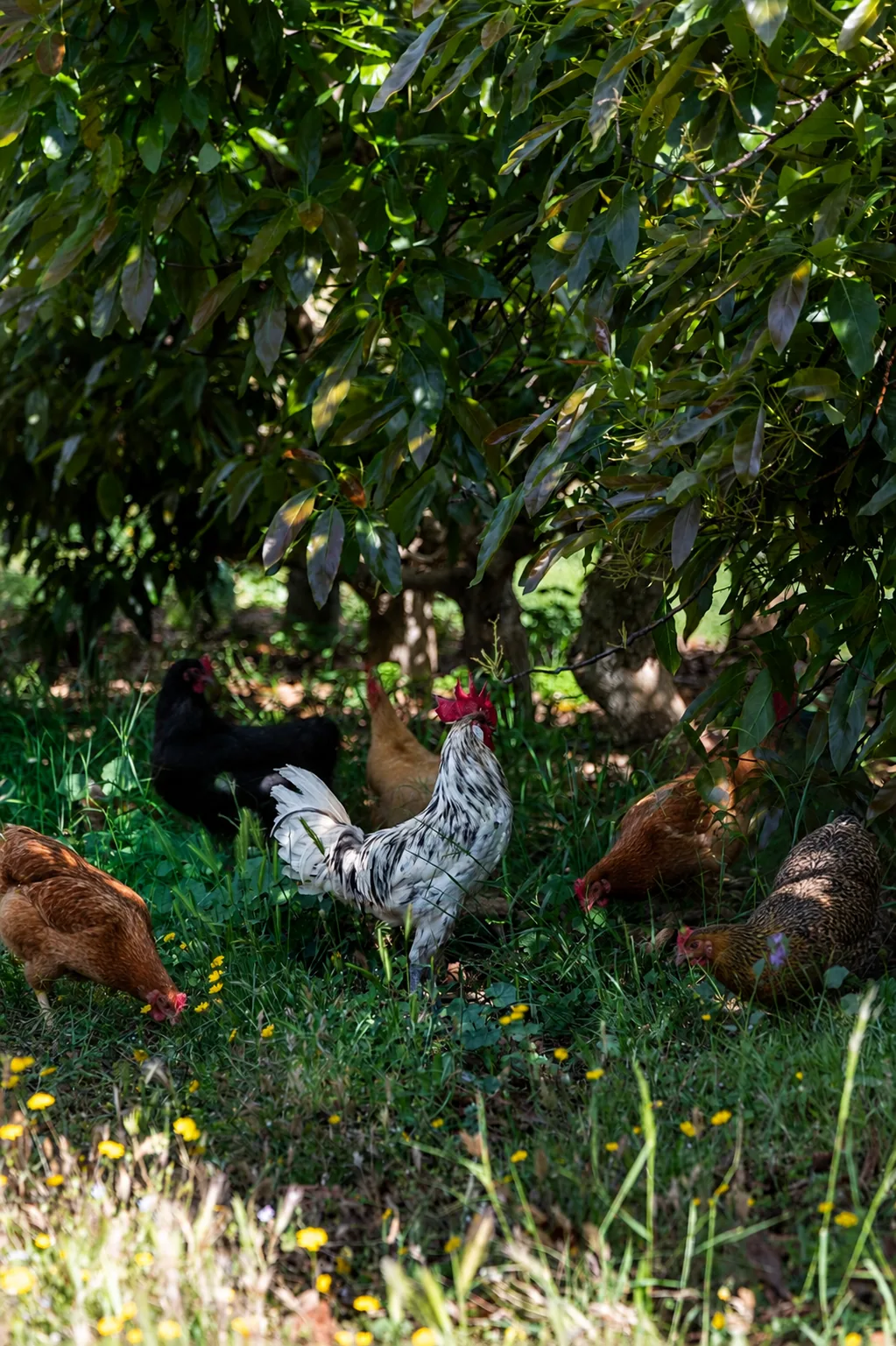
On the farm this is literal. A regenerative system keeps its nutrients on site: prunings go back on the soil, kitchen scraps go to the chickens, chicken bedding goes to the compost, compost goes back to the trees. An extractive system buys inputs at one end and creates waste at the other. Households, teams and friendships run the same way. Anything worth keeping needs the loop closed somewhere.
Does it work at the pace of the thing itself?
Soil takes years. Trees take decades. Recovery from a hard period of life takes considerably longer than a week away, however good that week is. Regenerative thinking mostly means matching your patience to the biology in front of you rather than to a calendar quarter.
Sustainable means holding the line. Regenerative means the line moves, slowly, in the right direction.
What it looks like on an ordinary day
- Light early, darkness late — the two cheapest interventions there are.
- Food that is mostly plants, mostly whole, mostly grown near where it is eaten.
- Movement spread through the day rather than compressed into one heroic hour.
- Work with edges around it, so that recovery is scheduled rather than hoped for.
- People, in person, regularly, including people who are not useful to you.
None of this is new, and none of it requires a farm. What a place like this does offer is a week where the regenerative version of a day is simply the easiest one available, which is a surprisingly effective way to learn what it feels like. More on that rhythm in Living by Natural Rhythms, and on the food side of it in Why We Grow Our Own Food.
Related reading

Living by Natural Rhythms
Light, movement, food and rest are not a protocol. They are a rhythm our biology still expects, and the fastest way back to feeling human.

Why We Created Monte Valeo, A Vision for Living More Human
A health scare, a long conversation and a hillside that would not let go. The story of why we chose to build something slower.

Why We Grow Our Own Food
From avocado terraces to the vegetable garden: what six hectares of regenerative farmland taught us about nourishment and patience.